
Vegetables in Chinese: Names, Useful Phrases, and Examples
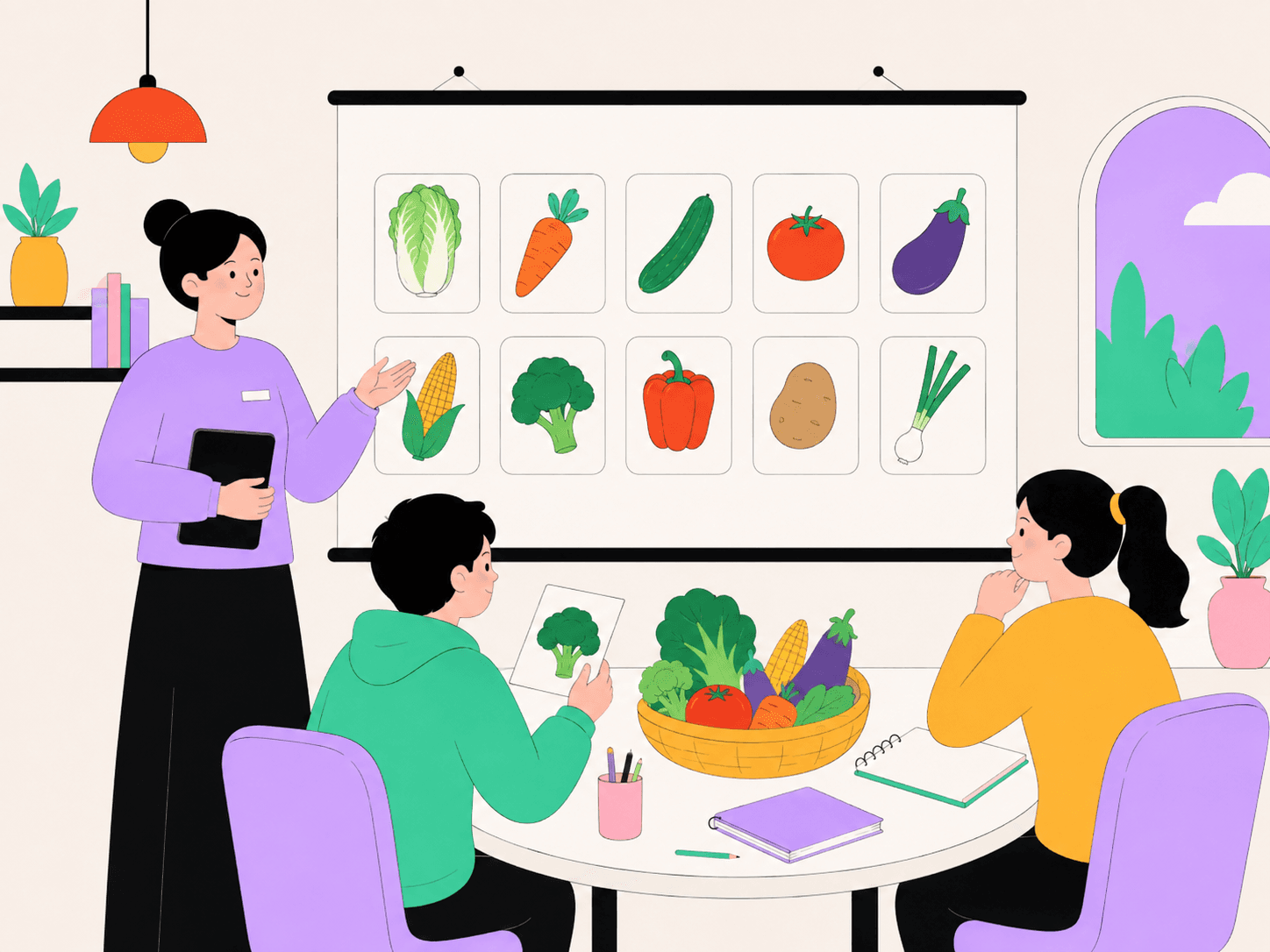
In Chinese, “vegetables” is:
蔬菜
shūcài
vegetables
The word 菜 cài can mean not only “vegetables,” but also “dish,” “food,” or “cuisine.” For example:
中国菜
Zhōngguó cài
Chinese cuisine / Chinese dishes
这个菜很好吃。
zhè ge cài hěn hǎochī.
This dish is very tasty.
So it is important to remember: 蔬菜 shūcài means specifically “vegetables,” while 菜 cài is a broader word.
Basic Vegetables in Chinese
Let’s start with the most common words that will definitely be useful in everyday life.
土豆
tǔdòu
potato
西红柿
xīhóngshì
tomato
番茄
fānqié
tomato
黄瓜
huángguā
cucumber
胡萝卜
húluóbo
carrot
白菜
báicài
Chinese cabbage / napa cabbage
卷心菜
juǎnxīncài
cabbage
洋葱
yángcōng
onion
大蒜
dàsuàn
garlic
辣椒
làjiāo
chili pepper / hot pepper
青椒
qīngjiāo
green bell pepper
茄子
qiézi
eggplant
南瓜
nánguā
pumpkin
蘑菇
mógu
mushrooms
玉米
yùmǐ
corn
菠菜
bōcài
spinach
生菜
shēngcài
lettuce
豆角
dòujiǎo
green beans
西兰花
xīlánhuā
broccoli
香菜
xiāngcài
cilantro / coriander
Tomato: 西红柿 or 番茄?
In Chinese, there are two common words for “tomato”:
西红柿
xīhóngshì
tomato
番茄
fānqié
tomato
Both words are correct. 西红柿 is more common in everyday speech, while 番茄 is often seen in the names of dishes, sauces, juices, and products.
西红柿鸡蛋汤
xīhóngshì jīdàn tāng
tomato and egg soup
番茄酱
fānqié jiàng
tomato sauce / ketchup
How to Say “I Like Vegetables”
The simplest phrase is:
我喜欢蔬菜。
wǒ xǐhuan shūcài.
I like vegetables.
You can replace 蔬菜 with a specific vegetable:
我喜欢土豆。
wǒ xǐhuan tǔdòu.
I like potatoes.
我喜欢黄瓜。
wǒ xǐhuan huángguā.
I like cucumbers.
我喜欢西红柿。
wǒ xǐhuan xīhóngshì.
I like tomatoes.
To say “I like … the most,” use 最喜欢 zuì xǐhuan.
我最喜欢茄子。
wǒ zuì xǐhuan qiézi.
I like eggplants the most.
你最喜欢什么蔬菜?
nǐ zuì xǐhuan shénme shūcài?
What vegetables do you like the most?
How to Say “I Don’t Like…”
To make a negative sentence with the verb 喜欢 xǐhuan, use 不 bù.
我不喜欢洋葱。
wǒ bù xǐhuan yángcōng.
I don’t like onions.
我不喜欢香菜。
wǒ bù xǐhuan xiāngcài.
I don’t like cilantro.
他不喜欢辣椒。
tā bù xǐhuan làjiāo.
He doesn’t like hot peppers.
You can say it more softly:
我不太喜欢香菜。
wǒ bú tài xǐhuan xiāngcài.
I don’t really like cilantro.
Measure Words with Vegetables
In Chinese, a measure word is often needed before a noun.
The most universal measure word is 个 ge. It can be used with many vegetables:
一个土豆
yí ge tǔdòu
one potato
两个西红柿
liǎng ge xīhóngshì
two tomatoes
三个茄子
sān ge qiézi
three eggplants
For some vegetables, more specific measure words can be used.
一根黄瓜
yì gēn huángguā
one cucumber
一根胡萝卜
yì gēn húluóbo
one carrot
一颗白菜
yì kē báicài
one head of Chinese cabbage
一头大蒜
yì tóu dàsuàn
one head of garlic
一把香菜
yì bǎ xiāngcài
one bunch of cilantro
一斤土豆
yì jīn tǔdòu
half a kilo of potatoes
斤 jīn is a Chinese unit of weight, about 500 grams. You can hear it very often in markets and shops in China.
How to Buy Vegetables in Chinese
If you are buying vegetables in a shop or at a market, these simple phrases will be useful.
我要买蔬菜。
wǒ yào mǎi shūcài.
I want to buy vegetables.
我想买一些土豆。
wǒ xiǎng mǎi yìxiē tǔdòu.
I want to buy some potatoes.
这个多少钱?
zhè ge duōshao qián?
How much is this?
黄瓜多少钱一斤?
huángguā duōshao qián yì jīn?
How much are the cucumbers per half kilo?
我要两个西红柿。
wǒ yào liǎng ge xīhóngshì.
I’ll take two tomatoes.
我要一斤土豆。
wǒ yào yì jīn tǔdòu.
I’ll take half a kilo of potatoes.
可以便宜一点吗?
kěyǐ piányi yìdiǎn ma?
Can it be a little cheaper?
How to Describe Vegetables
Vegetables are a convenient topic for learning adjectives: fresh, tasty, spicy, sweet, expensive, cheap.
新鲜
xīnxiān
fresh
好吃
hǎochī
tasty
辣
là
spicy
甜
tián
sweet
贵
guì
expensive
便宜
piányi
cheap
这些蔬菜很新鲜。
zhèxiē shūcài hěn xīnxiān.
These vegetables are very fresh.
这个西红柿很甜。
zhè ge xīhóngshì hěn tián.
This tomato is very sweet.
这个辣椒很辣。
zhè ge làjiāo hěn là.
This pepper is very spicy.
土豆不贵。
tǔdòu bú guì.
Potatoes are not expensive.
这个菜很好吃。
zhè ge cài hěn hǎochī.
This dish is very tasty.
Useful Questions About Vegetables
These phrases can be used in a shop, café, restaurant, or simply in conversation.
你喜欢吃什么蔬菜?
nǐ xǐhuan chī shénme shūcài?
What vegetables do you like to eat?
你喜欢土豆还是西红柿?
nǐ xǐhuan tǔdòu háishi xīhóngshì?
Do you like potatoes or tomatoes?
这个蔬菜叫什么?
zhè ge shūcài jiào shénme?
What is this vegetable called?
这个新鲜吗?
zhè ge xīnxiān ma?
Is this fresh?
这个辣吗?
zhè ge là ma?
Is this spicy?
有没有黄瓜?
yǒu méi yǒu huángguā?
Do you have cucumbers?
有别的蔬菜吗?
yǒu bié de shūcài ma?
Do you have any other vegetables?
Vegetables in Dishes
Vegetables often appear in the names of Chinese dishes. Here are a few useful combinations.
西红柿鸡蛋
xīhóngshì jīdàn
tomatoes with eggs
土豆丝
tǔdòu sī
shredded potatoes / potato strips
炒青菜
chǎo qīngcài
stir-fried greens / stir-fried green vegetables
白菜豆腐汤
báicài dòufu tāng
Chinese cabbage and tofu soup
蒜蓉西兰花
suànróng xīlánhuā
broccoli with garlic
Vegetables in Chinese are a great topic for beginners. They make it easy to memorize new words, practice tones, measure words, and simple phrases for communication.
Start with basic words: 蔬菜 shūcài, 土豆 tǔdòu, 西红柿 xīhóngshì, 黄瓜 huángguā, 胡萝卜 húluóbo, 茄子 qiézi. Then add phrases: what you like, what you want to buy, how to ask the price, and how to describe the taste.