
Names of Coffee and Coffee Drinks in Chinese
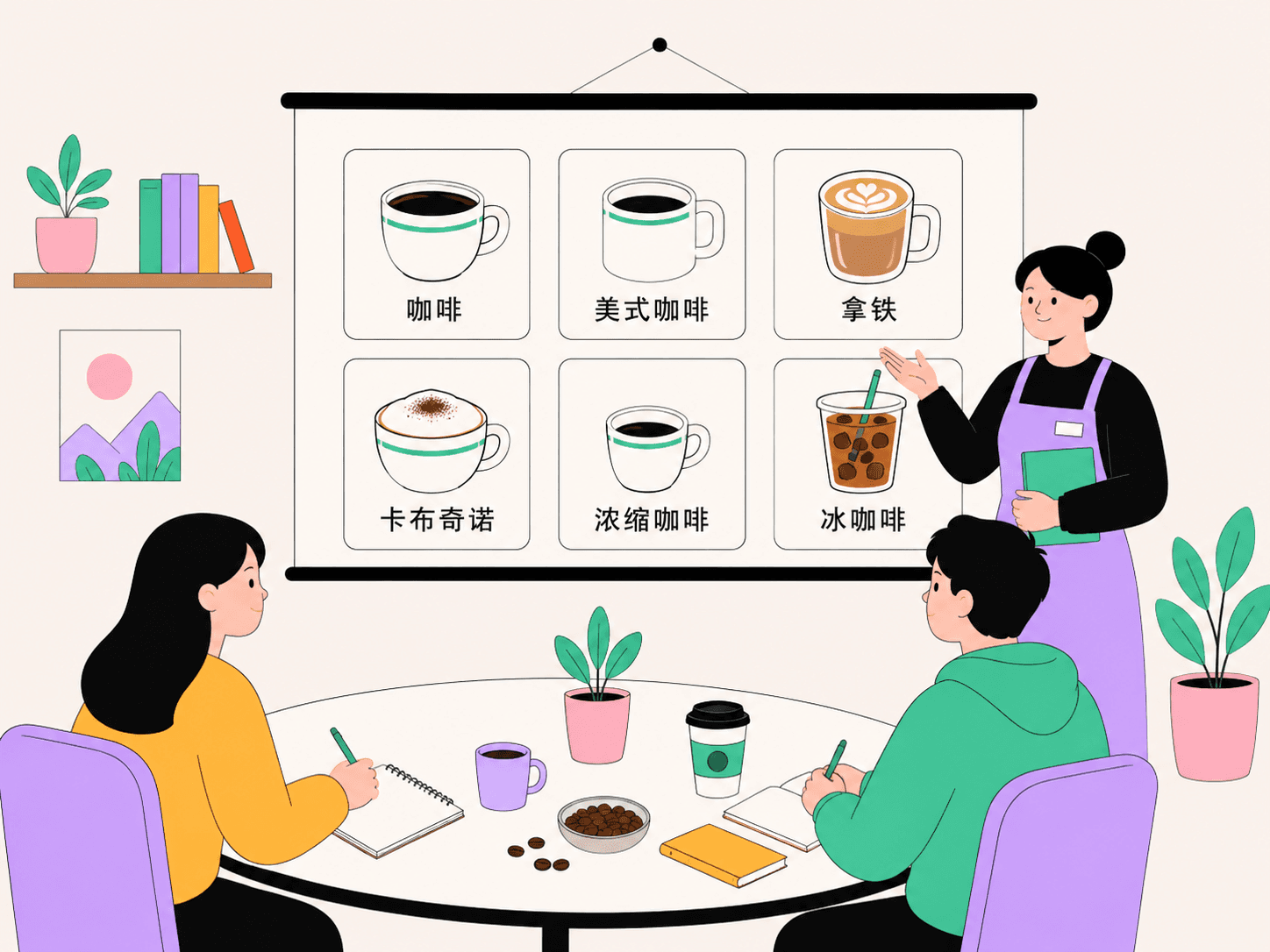
In Chinese, “coffee” is:
咖啡
kāfēi
coffee
我喜欢喝咖啡。
wǒ xǐhuan hē kāfēi.
I like drinking coffee.
我想买一杯咖啡。
wǒ xiǎng mǎi yì bēi kāfēi.
I want to buy a cup of coffee.
Main Types of Coffee in Chinese
Let’s start with the most popular drinks that are most often found in coffee shops.
美式咖啡
Měishì kāfēi
Americano
Literally, 美式 means “American style.”
拿铁
nātiě
latte
卡布奇诺
kǎbùqínuò
cappuccino
摩卡
mókǎ
mocha
浓缩咖啡
nóngsuō kāfēi
espresso
玛奇朵
mǎqíduǒ
macchiato
焦糖玛奇朵
jiāotáng mǎqíduǒ
caramel macchiato
冷萃咖啡
lěngcuì kāfēi
cold brew
冰咖啡
bīng kāfēi
iced coffee / coffee with ice
热咖啡
rè kāfēi
hot coffee
速溶咖啡
sùróng kāfēi
instant coffee
黑咖啡
hēi kāfēi
black coffee
咖啡 kāfēi Is a Borrowed Word
The word 咖啡 kāfēi entered Chinese based on sound. It sounds similar to the English word coffee and the Russian word “кофе.”
In Chinese, many foreign words are written with characters chosen for their sound. So 咖啡 is not literally translated as “coffee”; it represents the sound of this word.
The same can be seen in the names of some coffee drinks:
拿铁
nātiě
latte
摩卡
mókǎ
mocha
卡布奇诺
kǎbùqínuò
cappuccino
How to Say “I Want Coffee”
The simplest phrase is:
我要咖啡。
wǒ yào kāfēi.
I want coffee.
But in a café, it usually sounds more specific:
我要一杯咖啡。
wǒ yào yì bēi kāfēi.
I’ll have a cup of coffee.
我想要一杯拿铁。
wǒ xiǎng yào yì bēi nátiě.
I would like a cup of latte.
我要一杯美式咖啡。
wǒ yào yì bēi Měishì kāfēi.
I’ll have a cup of Americano.
我要一杯卡布奇诺。
wǒ yào yì bēi kǎbùqínuò.
I’ll have a cup of cappuccino.
Hot or Iced Coffee
In a café, you often need to specify what kind of coffee you want: hot or cold.
热
rè
hot
冰
bīng
icy / with ice
冷
lěng
cold
我要热咖啡。
wǒ yào rè kāfēi.
I’ll have hot coffee.
我要冰咖啡。
wǒ yào bīng kāfēi.
I’ll have iced coffee.
我要一杯冰美式。
wǒ yào yì bēi bīng Měishì.
I’ll have a cup of iced Americano.
我要一杯热拿铁。
wǒ yào yì bēi rè nátiě.
I’ll have a cup of hot latte.
In spoken Chinese, drink names are often shortened:
冰美式
bīng Měishì
iced Americano
热拿铁
rè nátiě
hot latte
Coffee with Milk, Sugar, and Syrup
If you need to specify what is in your drink, these words will be useful:
牛奶
niúnǎi
milk
糖
táng
sugar
糖浆
tángjiāng
syrup
奶油
nǎiyóu
cream
焦糖
jiāotáng
caramel
香草
xiāngcǎo
vanilla
巧克力
qiǎokèlì
chocolate
加牛奶
jiā niúnǎi
add milk
加糖
jiā táng
add sugar
加冰
jiā bīng
add ice
加糖浆
jiā tángjiāng
add syrup
不加糖
bù jiā táng
without sugar
不加冰
bù jiā bīng
without ice
少糖
shǎo táng
less sugar
半糖
bàn táng
half sugar
无糖
wú táng
sugar-free / no sugar
How to Order Coffee in Chinese
Here are some phrases you can use in a café.
我要一杯拿铁。
wǒ yào yì bēi nátiě.
I’ll have a cup of latte.
我要一杯冰美式。
wǒ yào yì bēi bīng Měishì.
I’ll have an iced Americano.
请给我一杯咖啡。
qǐng gěi wǒ yì bēi kāfēi.
Please give me a cup of coffee.
可以少糖吗?
kěyǐ shǎo táng ma?
Can I have less sugar?
可以不加糖吗?
kěyǐ bù jiā táng ma?
Can I have it without sugar?
可以加牛奶吗?
kěyǐ jiā niúnǎi ma?
Can you add milk?
可以加冰吗?
kěyǐ jiā bīng ma?
Can you add ice?
我要热的。
wǒ yào rè de.
I’ll have it hot.
我要冰的。
wǒ yào bīng de.
I’ll have it cold / with ice.
打包。
dǎbāo.
To go / takeaway.
在这里喝。
zài zhèlǐ hē.
For here / I’ll drink it here.
To Go or For Here
In a Chinese café, you may be asked whether you want to drink your beverage there or take it with you.
Useful words:
打包
dǎbāo
to go / pack to go
外带
wàidài
takeaway / to go
堂食
tángshí
eat or drink in / for here
我要打包。
wǒ yào dǎbāo.
I’ll take it to go.
我要外带。
wǒ yào wàidài.
I’ll take it away.
我在这里喝。
wǒ zài zhèlǐ hē.
I’ll drink it here.
堂食还是外带?
tángshí háishi wàidài?
For here or to go?
Drink Size
In coffee shops, you also often need to choose the size of the drink.
小杯
xiǎo bēi
small cup / small size
中杯
zhōng bēi
medium cup / medium size
大杯
dà bēi
large cup / large size
我要小杯拿铁。
wǒ yào xiǎo bēi nátiě.
I’ll have a small latte.
我要中杯美式咖啡。
wǒ yào zhōng bēi Měishì kāfēi.
I’ll have a medium Americano.
我要大杯冰咖啡。
wǒ yào dà bēi bīng kāfēi.
I’ll have a large iced coffee.
You can also say:
大杯的。
dà bēi de.
Large.
小杯的。
xiǎo bēi de.
Small.
Useful Questions in a Coffee Shop
These phrases will help you order a drink and clarify details.
你们有什么咖啡?
nǐmen yǒu shénme kāfēi?
What coffee do you have?
这个是什么咖啡?
zhè ge shì shénme kāfēi?
What kind of coffee is this?
这个甜吗?
zhè ge tián ma?
Is this sweet?
这个有牛奶吗?
zhè ge yǒu niúnǎi ma?
Does this have milk?
这个可以做冰的吗?
zhè ge kěyǐ zuò bīng de ma?
Can this be made iced / with ice?
这个可以做热的吗?
zhè ge kěyǐ zuò rè de ma?
Can this be made hot?
有没有无糖的?
yǒu méi yǒu wú táng de?
Do you have a sugar-free option?
可以用燕麦奶吗?
kěyǐ yòng yànmài nǎi ma?
Can it be made with oat milk?
Plant-Based Milk in Chinese
If you do not drink regular milk or want to order coffee with plant-based milk, these words will be useful:
燕麦奶
yànmài nǎi
oat milk
豆奶
dòunǎi
soy milk
杏仁奶
xìngrén nǎi
almond milk
椰奶
yēnǎi
coconut milk
我要燕麦拿铁。
wǒ yào yànmài nátiě.
I’ll have an oat milk latte.
可以换成燕麦奶吗?
kěyǐ huàn chéng yànmài nǎi ma?
Can it be changed to oat milk?
How to Say “Decaf, Please”
If you want coffee without caffeine, you can say:
低因咖啡
dīyīn kāfēi
low-caffeine coffee / decaf
无咖啡因咖啡
wú kāfēiyīn kāfēi
caffeine-free coffee / decaf coffee
有无咖啡因咖啡吗?
yǒu wú kāfēiyīn kāfēi ma?
Do you have decaf coffee?
我要一杯无咖啡因拿铁。
wǒ yào yì bēi wú kāfēiyīn nátiě.
I’ll have a decaf latte.
How to Say “The Coffee Is Tasty”
After ordering, you can use simple phrases to describe the drink.
这个咖啡很好喝。
zhè ge kāfēi hěn hǎohē.
This coffee is very tasty.
这个咖啡有点苦。
zhè ge kāfēi yǒudiǎn kǔ.
This coffee is a little bitter.
这个拿铁很香。
zhè ge nátiě hěn xiāng.
This latte is very aromatic.
这个咖啡太甜了。
zhè ge kāfēi tài tián le.
This coffee is too sweet.
好喝
hǎohē
tasty, when talking about drinks
苦
kǔ
bitter
甜
tián
sweet
香
xiāng
aromatic
浓
nóng
strong / rich
淡
dàn
weak / not rich
Coffee in Chinese is 咖啡 kāfēi. It is convenient to start with this word and then gradually add the names of drinks: 美式咖啡 Měishì kāfēi — Americano, 拿铁 nátiě — latte, 卡布奇诺 kǎbùqínuò — cappuccino, 摩卡 mókǎ — mocha, 冰咖啡 bīng kāfēi — iced coffee.
For ordering in a café, phrases with 一杯 yì bēi — “one cup / one glass,” 加 jiā — “to add,” 不加 bù jiā — “not to add,” 少糖 shǎo táng — “less sugar,” 打包 dǎbāo and 外带 wàidài — “to go” — are especially useful.
This vocabulary will be useful not only when traveling, but also in everyday communication: you will be able to read menus, place an order, and feel more confident in a Chinese-speaking environment.