
Fruits in Chinese: Names, Useful Phrases, and Examples
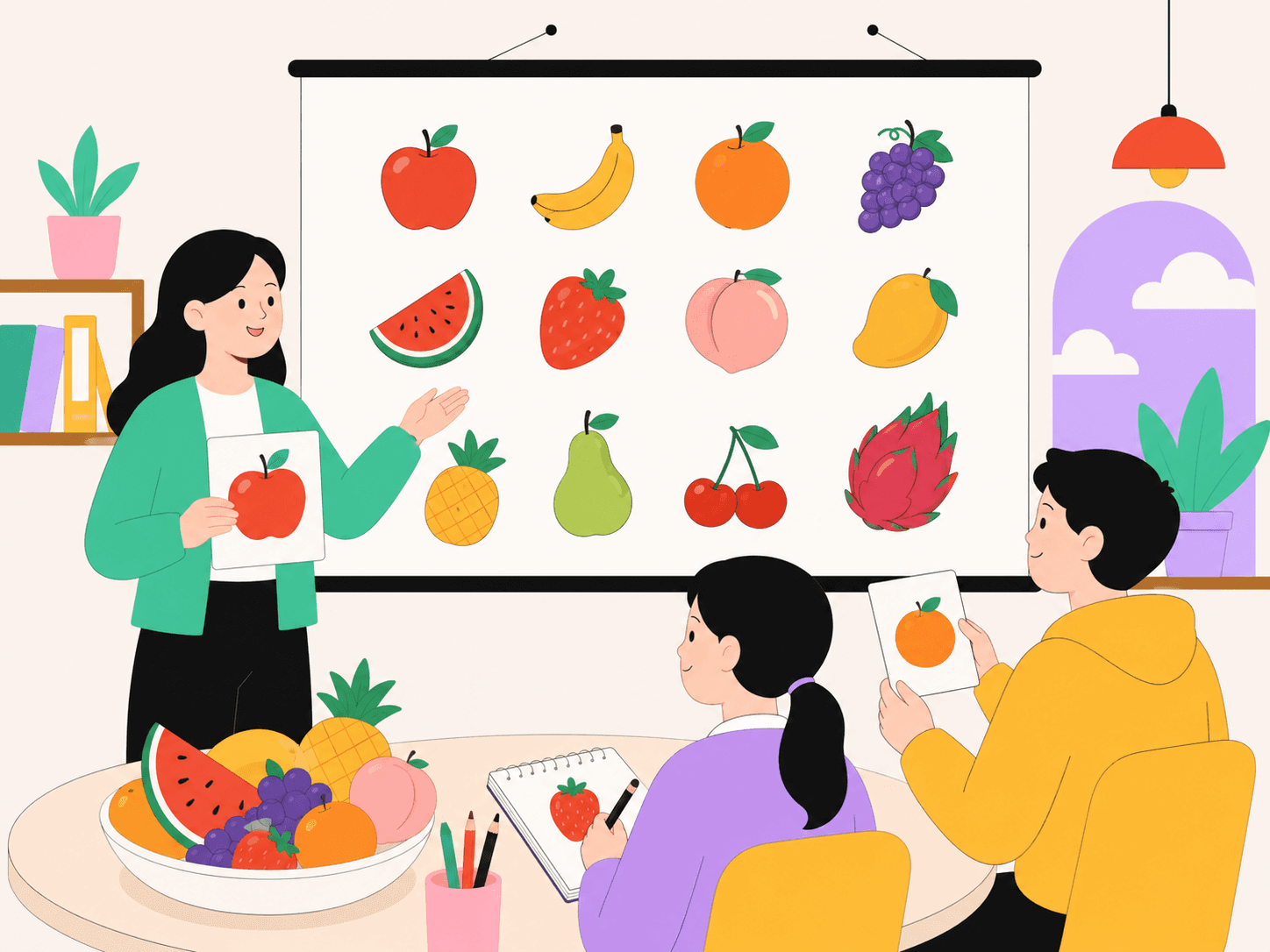
In Chinese, “fruits” is:
水果
shuǐguǒ
fruits
Literally, this word consists of two parts:
水 shuǐ — water
果 guǒ — fruit / fruit-bearing part
So 水果 shuǐguǒ can be remembered as “juicy fruits.”
Basic Fruits in Chinese
Let’s start with the most popular words that will definitely be useful in everyday life.
苹果
píngguǒ
apple
香蕉
xiāngjiāo
banana
橙子
chéngzi
orange
橘子
júzi
mandarin / tangerine
葡萄
pútao
grapes
西瓜
xīguā
watermelon
草莓
cǎoméi
strawberry
桃子
táozi
peach
梨
lí
pear
柠檬
níngméng
lemon
芒果
mángguǒ
mango
菠萝
bōluó
pineapple
樱桃
yīngtáo
cherry / sweet cherry
蓝莓
lánméi
blueberry
椰子
yēzi
coconut
How to Say “I Like Fruits”
The simplest phrase is:
我喜欢水果。
wǒ xǐhuan shuǐguǒ.
I like fruits.
You can replace 水果 with a specific fruit:
我喜欢苹果。
wǒ xǐhuan píngguǒ.
I like apples.
我喜欢草莓。
wǒ xǐhuan cǎoméi.
I like strawberries.
我喜欢芒果。
wǒ xǐhuan mángguǒ.
I like mangoes.
To say “I like … the most,” use 最喜欢 zuì xǐhuan.
我最喜欢西瓜。
wǒ zuì xǐhuan xīguā.
I like watermelon the most.
你最喜欢什么水果?
nǐ zuì xǐhuan shénme shuǐguǒ?
What fruit do you like the most?
How to Say “I Don’t Like…”
To make a negative sentence with the verb 喜欢 xǐhuan, we use 不 bù.
我不喜欢香蕉。
wǒ bù xǐhuan xiāngjiāo.
I don’t like bananas.
我不喜欢柠檬。
wǒ bù xǐhuan níngméng.
I don’t like lemons.
他不喜欢葡萄。
tā bù xǐhuan pútao.
He doesn’t like grapes.
You can say it more softly:
我不太喜欢香蕉。
wǒ bú tài xǐhuan xiāngjiāo.
I don’t really like bananas.
Measure Words with Fruits
In Chinese, a measure word is often placed before a noun.
The most universal measure word is 个 ge. It can be used with many fruits:
一个苹果
yí ge píngguǒ
one apple
两个橙子
liǎng ge chéngzi
two oranges
三个桃子
sān ge táozi
three peaches
For some fruits, you can use other measure words if you want to sound more precise.
一串葡萄
yì chuàn pútao
one bunch of grapes
一片西瓜
yí piàn xīguā
one slice of watermelon
一盒草莓
yì hé cǎoméi
one box of strawberries
一斤苹果
yì jīn píngguǒ
half a kilo of apples
斤 jīn is a Chinese unit of weight, approximately 500 grams. You can hear it very often in markets and shops in China.
How to Buy Fruits in Chinese
If you are buying fruit in a shop or at a market, these simple phrases will be useful.
我要买苹果。
wǒ yào mǎi píngguǒ.
I want to buy apples.
我想买一些水果。
wǒ xiǎng mǎi yìxiē shuǐguǒ.
I want to buy some fruit.
这个多少钱?
zhè ge duōshao qián?
How much is this?
苹果多少钱一斤?
píngguǒ duōshao qián yì jīn?
How much are the apples per half kilo?
我要两个苹果。
wǒ yào liǎng ge píngguǒ.
I would like two apples.
我要一斤葡萄。
wǒ yào yì jīn pútao.
I would like half a kilo of grapes.
可以便宜一点吗?
kěyǐ piányi yìdiǎn ma?
Can it be a little cheaper?
How to Describe Fruits
Fruits are great for learning adjectives: sweet, sour, fresh, tasty.
甜
tián
sweet
酸
suān
sour
新鲜
xīnxiān
fresh
好吃
hǎochī
tasty / delicious
贵
guì
expensive
便宜
piányi
cheap
Examples:
这个苹果很甜。
zhè ge píngguǒ hěn tián.
This apple is very sweet.
这个橙子有点酸。
zhè ge chéngzi yǒudiǎn suān.
This orange is a little sour.
这些草莓很新鲜。
zhèxiē cǎoméi hěn xīnxiān.
These strawberries are very fresh.
西瓜很好吃。
xīguā hěn hǎochī.
Watermelon is very tasty.
芒果有点贵。
mángguǒ yǒudiǎn guì.
Mangoes are a little expensive.
Useful Questions About Fruits
You can use these phrases in a shop, café, or just in conversation.
你喜欢吃什么水果?
nǐ xǐhuan chī shénme shuǐguǒ?
What fruit do you like to eat?
你喜欢苹果还是香蕉?
nǐ xǐhuan píngguǒ háishi xiāngjiāo?
Do you like apples or bananas?
这个水果叫什么?
zhè ge shuǐguǒ jiào shénme?
What is this fruit called?
这个甜吗?
zhè ge tián ma?
Is this sweet?
这个新鲜吗?
zhè ge xīnxiān ma?
Is this fresh?
有没有西瓜?
yǒu méi yǒu xīguā?
Do you have watermelon?
有别的水果吗?
yǒu bié de shuǐguǒ ma?
Do you have any other fruit?
Fruits in Drinks and Desserts
Fruits often appear in the names of drinks, desserts, and flavors.
苹果汁
píngguǒ zhī
apple juice
橙汁
chéngzhī
orange juice
柠檬茶
níngméng chá
lemon tea
芒果冰沙
mángguǒ bīngshā
mango smoothie / icy drink
草莓蛋糕
cǎoméi dàngāo
strawberry cake
香蕉牛奶
xiāngjiāo niúnǎi
banana milk
Useful structure:
fruit + 汁 zhī = juice
苹果汁 — apple juice
西瓜汁 — watermelon juice
葡萄汁 — grape juice
Fruits in Chinese are a great topic for beginners. They make it easy to memorize new words, practice tones, measure words, and simple phrases for communication.
Start with the basic words: 苹果 píngguǒ, 香蕉 xiāngjiāo, 橙子 chéngzi, 葡萄 pútao, 西瓜 xīguā, 草莓 cǎoméi. Then add phrases about what you like, what you want to buy, and how much something costs.